The Myth of the Greenest Purchase
The greenest purchase is often no purchase at all. Learn to check need, function and alternatives before choosing a lower-impact item for your home.

The greenest purchase may be the one you do not make, but that is not always the right answer. If you are weighing a bamboo version against a recycled-plastic one, the more useful first question is whether either item is needed and what job it must do.
A single appealing feature can make a product seem like an obvious choice: compostable packaging, recycled content, a natural material or a refill option. Yet that feature says little on its own about whether the product suits your home, replaces something you already own, or will be used as intended. A better decision begins with the job, then compares realistic options.
Start with the need, not the eco-friendly feature
Before looking at labels, describe the problem in plain terms. Is a pan handle broken, is a cupboard short of storage, or are you simply drawn to a new item that promises to make a familiar task feel easier? These situations call for different responses.
If an existing object still does the job, keeping it in use may be the most fitting choice. If it is damaged, consider whether a repair or a part would restore its function. If there is a genuine gap, then buying becomes a reasonable option to assess rather than the automatic starting point.
This is not a rule against buying. Needs change, and a replacement can be sensible when an object no longer works for its purpose. The point is to make the purchase answer a specific need, rather than letting an eco-sounding feature create one.
Compare three ways to respond
Keep using what you have
This suits an item that remains useful, safe for its intended purpose and acceptable to live with. A slightly scuffed lunch box, for instance, may still close properly and carry food without difficulty; a new one would add another object without solving a real problem.
Keeping an item is less persuasive if it repeatedly fails at the task or cannot be used as intended. The relevant question is not whether it looks old, but whether it still meets the need.
Repair or adapt the existing item
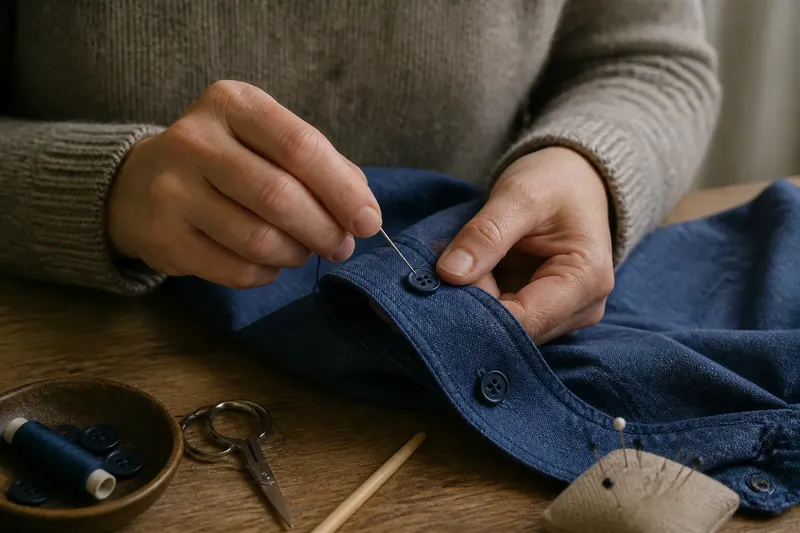
Repair suits a problem that is limited and understood. A loose drawer pull may need a replacement screw, while a lamp with an electrical fault calls for more caution and, where appropriate, a qualified repairer. Adapting can also mean assigning a sound object to another useful role, provided it genuinely works there.
This option depends on time, skill, access to parts and the nature of the repair. A fix that leaves the object unreliable may only postpone a more suitable decision; a straightforward repair can avoid bringing in a replacement that does the same job.
Buy an item for the actual job
Buying suits a genuine gap, an item beyond useful repair, or a task for which the current option is unsuitable. It also gives you a chance to consider second-hand goods, borrowing, renting or a product designed to be maintained, depending on how often and how long you expect to need it.
Choose for the conditions of your own home. A delicate, natural-fibre cloth may suit someone who washes it carefully, while a household that needs a robust cloth for messier jobs may be better served by a different material. Neither label decides the matter without the use in view.
Choose by function before material or label
Write down what the item must do, including the conditions it will face. For a food-storage container, that might mean holding a particular kind of food, fitting a shelf and being easy to clean. For a coat hook, it may mean holding the usual load and fitting the available wall space.
Then check whether the appealing feature changes anything that matters to that job. Recycled content may be a relevant distinction, but it does not make a poorly sized container useful. A refill system may suit a product you buy regularly, but it is less compelling if the refill is hard to obtain or the product itself does not meet your needs.
Product details and care instructions can help clarify what an item is designed for. Where the right choice depends on a label, manufacturer instructions or local rules, check those before deciding.
Use a simple decision habit before buying
- Name the need. Describe the task or problem without naming a product.
- Check what you already own. Look for an item that can do the job without creating another problem.
- Consider repair, sharing or temporary access. Ask whether a repair, borrowed item or rental fits the likely use.
- Set the must-haves. Note the function, fit, care and durability requirements that matter in your home.
- Compare suitable options. Look at new and second-hand choices, then assess materials and other environmental features among items that meet the need.
- Pause if the case is still unclear. If the purchase is optional, leave it aside and see whether the problem remains.
Say you have a chipped mug and are considering a new one made from recycled ceramic. Imagine the mug still holds a drink comfortably and the chip is not on the rim; the expected observable result of keeping it is that it continues to serve its ordinary use, so the new mug is not needed for that purpose. If the chip makes it unpleasant or unsuitable to use, the need changes, and a replacement can be compared for fit and likely use rather than chosen for one claim alone.
Which buying approach fits your situation?
Should I always repair before replacing?
No. Repair makes sense when the fault is understood and the result would be useful for the task. If the item remains unsuitable or a repair is beyond your skills, consider another option rather than treating repair as an obligation.
Is second-hand always the better choice?
Second-hand can keep a usable object in circulation, but suitability still matters. Check that the item meets its intended need and is in a condition you are comfortable using; an unsuitable purchase is still a poor match.
How much should a product label influence my choice?
Use a label as one piece of information, not a substitute for checking the need and function. Look at what the claim actually describes, then compare it with other features that affect whether you will use and care for the item.
What if several options seem equally suitable?
Choose the option that fits your routines and is easiest to keep useful, rather than chasing a perfect-sounding feature. If the choice is not urgent, waiting can also reveal whether the need is real.
Let usefulness set the order of the decision
The greenest purchase is not a universal product category or a material with a flawless reputation. It is a decision made in the right order: establish the need, check what can already meet it, and only then compare items that do the job.
That order keeps a thoughtful purchase from becoming a way to collect more things in the name of improvement. Like choosing a tool for a particular screw, the useful question is whether it fits the task in front of you. Once need and function are clear, environmental features can help distinguish between suitable choices without pretending to settle the whole decision.